The Blue Eye Albania (Syri i Kaltër)
Nature reserve & karst spring near Sarandë, Albania
Discover The Blue Eye
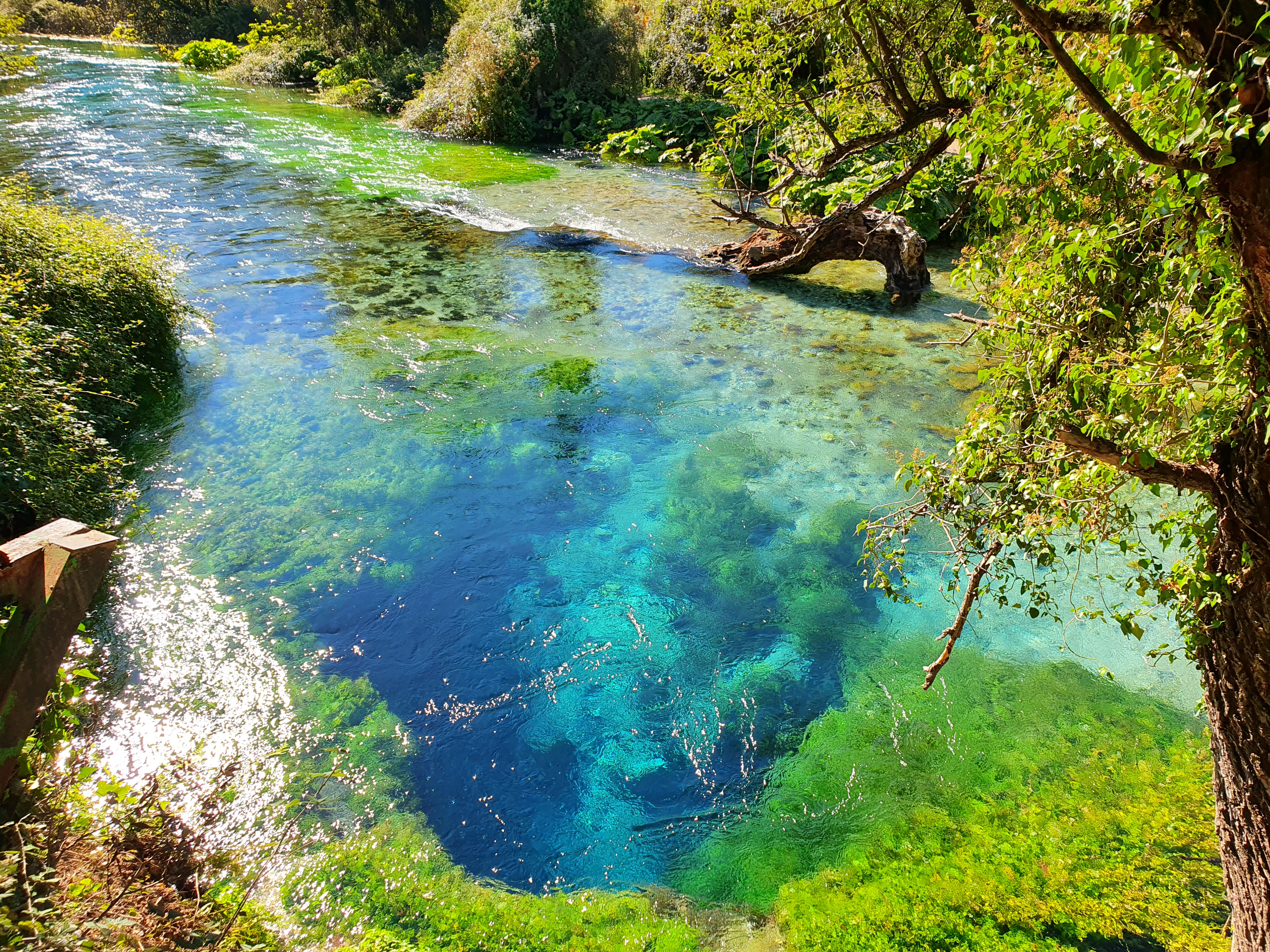
The Blue Eye (Albanian: Syri i Kaltër; German: Blue Eye Albanien) is a stunning water spring and natural phenomenon occurring near Muzinë in Vlorë County, Albania. A popular tourist attraction, the clear blue water of the river bubbles forth from a stunning, more than fifty-metre-deep pool. Divers have descended to fifty metres, but it is still unclear what the actual depth of the karst hole is.
Visit Tips
- The water is extremely cold, usually around 10°C (50°F).
- Swimming is officially prohibited to protect the natural environment.
- There are cafes and restaurants nearby for refreshments.
- The area is surrounded by lush green forests, perfect for a short hike.
Highlights
- Crystal clear blue water
- Deep karst spring
- Surrounding oak and sycamore trees
- Breathtaking natural beauty
About The Blue Eye
About The Blue Eye
Location & Geography
Located in southern Albania, The Blue Eye is the initial water source of the Bistricë river, which ends in the Ionian Sea south of Saranda. The spring is situated in a dense forest of oaks and sycamores.
Natural Phenomenon
The spring owes its name to its striking appearance: the deep center is a dark blue, like the pupil of an eye, while the surrounding shallower water is a lighter shade of blue, like the iris.
Names Around the World
The spring is known as Syri i Kaltër ("Blue Eye") in Albanian, The Blue Eye or Blue Eye Albania in English, Blue Eye Albanien in German travel guides, and 蓝眼泉 (Lán Yǎn Quán) in Chinese. All of these names refer to the same karst spring near Muzinë, about 25 km from Saranda.
Nearby Attractions
While visiting The Blue Eye, travelers can easily explore other highlights of southern Albania, including the beach resorts of Ksamil and the UNESCO-listed ancient city of Butrint, both within a short drive of Saranda. The historic city of Gjirokastër, itself a UNESCO World Heritage site, lies about half an hour's drive further along the same road.
Where the Water Comes From
Rain and snowmelt falling on the Mali i Gjerë massif disappear into fractured limestone and travel through karst conduits before rising again under pressure at the spring, roughly 152 metres above sea level. Average discharge is about 18,400 litres per second and the water stays close to 10°C all year — cold enough that the outflow has long suited trout farming along the Bistricë valley.
Woodland & Wildlife
The reserve protects characteristic karst woodland: oak and plane (sycamore) trees close into a canopy over the spring, giving way to willows and alders along the water's edge. The birdlife is that of southern Albania's riverine forests, while the cold, oxygen-rich water limits which aquatic species can live here. The dense cover is also why the spring stays shaded and cool even in August.
Protection & Visitor Pressure
Around 180 hectares surrounding the spring were designated a Nature Monument (IUCN category III) in 1996 and are administered within Albania's national protected-area system. Day-to-day management centres on keeping visitors on fixed paths, discouraging swimming in the spring itself, and limiting litter and fire risk. Drought and summer wildfire — including a fire in 2017 — are the two pressures those responsible for the site watch most closely.
Basic Information
Official Name
The Blue Eye (Syri i Kaltër)
Attraction Type
Nature Reserve
Google Rating
4.4 (16,893)
Accessibility
Partial
Plus Code
W5FV+G4 Saranda, Albania
Address
Sarande SHA22, Saranda 9701 Albania
Opening Hours & Best Time to Visit
Reserve Access
Usually open from 7:00 AM to 7:00 PM (Summer hours may vary)
Best Time to Visit
Spring: Lush greenery and fewer crowds
Summer: Great for cooling down, but very crowded
Best Time to Visit
Autumn: Beautiful foliage and pleasant weather
Winter: Quiet, but many facilities may be closed
Arrive early: getting here before 9:00 usually means a quieter spring, easier parking and softer light for photographs.
Weather at the Spring
Current conditions and a seven-day outlook for the Blue Eye at Muzinë, so you can plan what to wear, when to arrive and when the light is best.
Now
20°C
Clear sky
Feels like
19°C
Humidity
52%
Wind
6 km/h
Precipitation
0.0 mm
Sunrise
06:54
Sunset
17:54
What to wear
- ✓Big day-to-night swing — pack a layer you can add or remove.
Plan for your visit
- ✓Fine weather — great for the outdoors and sunrise or sunset.
Things to bring
- ✓Don't forget sun protection
7-day forecast
Today
19 Oct
Clear sky
21°
13°
0%
Tue
20 Oct
Mainly clear
22°
14°
0%
Wed
21 Oct
Thunderstorm
20°
16°
63%
Thu
22 Oct
Thunderstorm
20°
16°
62%
Fri
23 Oct
Rain showers
20°
14°
39%
Sat
24 Oct
Overcast
20°
12°
14%
Sun
25 Oct
Overcast
20°
12°
21%
Updated: 19 Oct, 16:30
Entrance Fee & Ticket Prices
Entrance Fee
Approx. 50 lek per person
Parking
Approx. 200 lek per vehicle
Payment
Cash only — bring Albanian lek (ALL) in small notes
Guided Tours
It is recommended to book day tours in advance through local travel agencies in Saranda or Gjirokastër
Prices are set by the protected-area authority and may change by season. They are given here only as an indication — please follow the signage and any instructions at the entrance.
Swimming Rules at The Blue Eye
One of the most searched questions about Syri i Kaltër: can you get into the water? Here is the official position, what happens in practice, and the thinking behind the rule.
Swimming is not permitted in the spring. The Blue Eye is a protected Nature Monument (IUCN category III), and signage at the site states that entering the water is prohibited. The rule exists to protect visitors and the karst water system alike.
What happens in practice
Despite the ban, some visitors do get into the water on hot summer afternoons. We do not recommend following them: beyond the rule itself, the water stays around 10 °C all year, the upwelling current is strong, and the shaft has never been fully surveyed — divers have reached 50 m without touching the bottom.
Why swimming is prohibited
- The spring is the source of the Bistricë river and part of a karst aquifer: sunscreen, soap and body oils enter the water directly and cannot be filtered out.
- At roughly 10 °C the water can trigger cold-water shock, and the upward pressure makes swimming far harder than it looks from the platform.
- The true depth is unknown — the strong upwelling has so far prevented a complete survey of the shaft.
- The banks are fragile and erode quickly when people leave the marked platforms.
Where to swim instead
For a swim, head to the public beaches on the coast: Ksamil and the Sarandë seafront are the closest options, around 30–45 minutes away by road.
Swimming rules are set by the protected-area authority and can change. Follow the signage on site and any instructions from staff.
Visitor Facilities & Services
What exists on site, what you will find in the nearest towns, and what is worth arranging before you set out.
This guide is independent and non-commercial. We describe facility types only — no specific business, brand or operator is named, ranked or recommended.
On-site facilities
Public restrooms
On sitePublic toilets are found near the entrance and at some food stops along the approach path. Standards are basic, a small fee is sometimes charged, and queues build up around midday in summer. Carry tissues and hand sanitiser with you.
Parking
On siteA paid car park serves the reserve entrance. Capacity is limited and fills on summer weekends, so arriving before 10:00 noticeably improves your chances. Coaches and larger vehicles use separate bays.
Trails & viewing platforms
On siteA mostly level path of roughly 1.5–2 km links the car park with the spring. Wooden viewing platforms and railings surround the water, with benches set back among the trees.
Rest areas & shade
On siteBenches and shaded spots are spread along the approach path, but some stretches are exposed. In July and August a hat and a bottle of water make the walk considerably more comfortable.
Waste & recycling
On siteBins stand along the main path, yet they overflow on busy days. The reserve has no capacity to absorb litter, so carry out whatever you bring in.
Drinking water
On siteThe spring looks pristine, but it is untreated water from a karst catchment shared with the wider massif and is not monitored as a drinking supply. Bring your own bottles rather than filling up at the source.
Food & drink
Restaurants & cafés
On siteA cluster of simple restaurants and cafés operates near the spring and along the approach path, serving grilled meat, salads, coffee and Albanian home cooking. Most trade seasonally and many close outside the summer months.
Local trout
Nearby townsCold-water trout farms along the Bistricë use water from the same karst system, and trout is the dish most often associated with the valley. Availability depends on the season and on what is being harvested.
Picnic spots
On siteShaded places beside the stream are used for picnics. Open fires have no place inside a protected monument — use the designated food areas and take your packaging home.
Dietary requirements
Plan aheadGrilled vegetables, salads and cheese are usually available, but vegan, halal or gluten-free choice is limited in a rural area. Travellers with strict requirements are better served eating in Sarandë before setting out.
Accommodation & supplies
Accommodation
Nearby townsThere is no lodging inside the nature monument itself. The nearest hotels and guesthouses are in Sarandë and Ksamil on the coast, or in Gjirokastër and Delvinë inland; a few village guesthouses operate in the countryside between them.
Camping & overnight stays
Plan aheadWild camping and overnight stays are not appropriate inside a protected area. If you want to sleep outdoors, look for established campsites on the coast.
Shops & pharmacies
Plan aheadNo supermarket or pharmacy stands at the spring. Seasonal kiosks sell drinks and snacks at prices above town levels, so stock up on water, sun protection and any medicine in Sarandë or Gjirokastër first.
Souvenirs & local produce
On siteSeasonal stalls near the entrance sell postcards, magnets and local honey or herbs. Quality and pricing vary, and there is no obligation to buy.
Vehicles & refuelling
Fuel stations
Nearby townsPetrol stations line the Sarandë–Gjirokastër road and the outskirts of Sarandë, but there is none at the spring. Fill up before heading inland, especially if you plan to return after dark.
EV charging
Plan aheadPublic charging infrastructure in southern Albania remains sparse and its reliability varies. Charge in Sarandë or a larger city before the trip and treat the Blue Eye as a destination without charging.
Car & scooter hire
Nearby townsCar, scooter and e-scooter hire is common in Sarandë. Scooters suit the short coastal run, but the inland road has bends, blind corners and tour buses — ride defensively and wear a helmet.
Cash & cards
Plan aheadEntry and parking fees, kiosks and smaller eateries often work cash-only. Albanian lek (ALL) is essential, and small notes make toilets, parking and tips much easier.
Services & safety
Medical help
Nearby townsThere is no first-aid post or pharmacy at the spring. The nearest pharmacies and medical services are in Sarandë. Bring personal medication, plasters and insect repellent with you.
Mobile signal & Wi-Fi
Plan aheadCoverage in the valley is patchy and data can drop out on the approach road. Some cafés offer Wi-Fi, but do not count on it — download maps and tickets before you leave town.
Accessibility
On siteThe approach path is largely flat and firm, while the final section to the viewing platform includes steps and uneven ground. Visitors with limited mobility may prefer to be dropped near the entrance and take their time.
Children & older visitors
On siteThe water's edge is railed, but the ground can be slippery and the water holds at about 10°C year-round. Keep children within arm's reach; sturdy shoes help on the gravel stretches.
Drones & photography
Plan aheadRecreational drone use over Albanian protected areas is restricted and normally needs authorisation. Tripods are fine on the platforms — please keep the narrow walkways clear for other visitors.
Geology, History & Protection
How the spring was formed, and how it came to be protected.
Key figures
Spring altitude
152 m
Average discharge
≈18,400 litres/second
Protected area
1.8 km² (180 ha)
IUCN category
III — Natural Monument
Designated
1996
Explored depth
50 m; bottom unknown
Bistricë river
≈25 km to the Ionian Sea
Water temperature
≈10 °C year-round
A limestone reservoir
Rain and snowmelt falling on the Mali i Gjerë massif seep into fractured limestone. Slightly acidic water slowly widens cracks into conduits, building the karst aquifer that still feeds the spring today.
An artesian upwelling
Water rises under pressure through a vertical shaft and overflows at about 152 m above sea level. The strong upward flow is why the centre reads almost black, and why divers find the shaft difficult to descend.
Springs of Bistricë
The outflow forms the Bistricë, a river of roughly 25 km that reaches the Ionian Sea south of Sarandë. Its cold, stable water has made the valley suitable for trout farming and for hydroelectric use downstream.
Declared a Natural Monument
The area was designated a Nature Monument under IUCN category III, protecting around 180 hectares of oak and plane woodland around the spring within Albania's protected-area system.
The summer it ran dry
In the summer of 2004 the spring temporarily dried up — a vivid reminder that karst systems respond quickly to drought and to pressure on the aquifer that feeds them.
Wildfire damage
Part of the surrounding woodland burned in the 2017 summer fires. Regeneration has been gradual, and the event is frequently cited in local discussions of fire risk and visitor management.
Balancing visits with protection
Visitor numbers have risen sharply over the past decade. Management now focuses on channelling footfall along fixed paths, keeping the spring undisturbed and protecting the water quality that makes the site remarkable.
Legends & Local Stories
The stories below belong to local oral tradition. They are recorded here as cultural heritage, not as scientific or historical fact.
The eye of the giant serpent
Folk taleA tale told in the villages below Mali i Gjerë describes a giant serpent (heshdërha) that rose from the sea near today's Sarandë, devoured people at a spring in Delvinë and then whole flocks on the mountain. An old man loaded a donkey with straw, set it alight and let the beast swallow it. In its agony the serpent crossed the mountainside — leaving the parallel lines of trees said to be still visible on the slope — and where it finally fell, its blue eye dropped to the ground and water began to flow. The spring, the story says, is that eye still weeping.
The dragon version
VariantOther versions of the same story replace the serpent with a dragon. Both creatures belong to an older stratum of belief: scholars of Albanian folklore, notably Robert Elsie, note that the serpent was an important symbol for the ancient Illyrians, and dragon motifs survive in stone reliefs at religious sites in the Delvinë–Sarandë area.
Why it is called an eye
NamingThe name is descriptive rather than mythical: the deep centre reads as a dark pupil and the shallower rim as a lighter iris. Albanian Syri i Kaltër simply means the blue eye, and most other languages translate or transliterate that image directly.
The spring with no bottom
Local beliefBecause divers have never reached the floor of the shaft, a local belief holds that the spring is bottomless or connected to the sea. Hydrologically it is a karst conduit fed from within the massif: the true depth is unmeasured rather than infinite.
How to Get to The Blue Eye from Sarandë & Ksamil
From Sarandë
About a 30-40 minute drive inland towards Gjirokastër.
From Tirana Airport
The nearest major airport is Tirana International Airport (TIA), about 280 km north. From there the simplest route is to drive south (4–5 hours) via the A1 and coastal roads, or take a domestic flight to the much closer Corfu (Greece) and a short ferry to Sarandë, then drive ~30–45 minutes inland. Buses and private transfers run from Tirana to Sarandë throughout the day.
From Gjirokastër
About a 45-60 minute drive towards Saranda.
Public Transport
A public bus runs between Sarandë and Gjirokastër and can drop you at the Blue Eye junction — tell the driver 'Syri i Kaltër'. The fare is around 300 Lek and the ride about 45 minutes. From the drop-off you still walk about 2 km along a scenic road to the ticket office and spring. Services are more frequent in summer; off-season, confirm times locally.
Walking
From the main road turnoff or parking area, you will need to walk 1.5 to 2 km along a paved or dirt path surrounded by nature to reach the spring. Comfortable walking shoes are highly recommended.
Driving
The most convenient way to reach the reserve. There is a parking area near the entrance. The road conditions are good, but it can get quite crowded during the summer peak season, so arriving early is recommended. Renting a car or a scooter from Sarandë is also a very popular option.
Taxi
Taxis and ride-hailing apps operate in Sarandë and Ksamil. A one-way taxi to the Blue Eye typically takes 30–45 minutes; arranging the return trip in advance is wise, as on-site availability is limited. Agree the fare before departure and keep small cash (Lek) on hand.
Organised tour
Many local agencies in Sarandë and Ksamil sell half-day or full-day excursions that combine the Blue Eye with Butrint, Gjirokastër or Ksamil. A guided option removes the hassle of driving and parking, and usually includes hotel pickup.
Recommended Route
A loop that works for most visitors: park, walk in, see the spring, follow the outflow downstream, then continue to the coast or the mountain towns the same day.
Park at the reserve entrance (paid, limited spaces — early arrival helps)
Walk the shaded 1.5–2 km trail to the spring, allowing 25–30 minutes
Spend time on the viewing platform: look for the dark pupil and the lighter rim
Follow the outflow downstream to see the Bistricë running clear over pale limestone
Stop for coffee or a meal at one of the simple eateries along the path
With your own vehicle, continue to Ksamil, Butrint or Gjirokastër the same day
Head back before dusk — the approach road is quiet and unlit
Seasonal Visitor Strategy
How weather, the spring's clarity and wildlife shift through the year — and what each season is best for.
Based on long-term climate observations for southern Albania and visitor reports, not an official forecast. Always check a current forecast before travelling.
| Season | Weather & light | The spring & water | Wildlife & nature | Best for |
|---|---|---|---|---|
| Spring (Mar–May) | Mild, 15–22°C; rain showers possible. Long, soft daylight — ideal for photography. | Snowmelt swells the flow; the deep blue is vivid and the surrounding green is at its freshest. | Migrating birds and flowering woodland; wildflowers along the path. | Photographers, hikers and anyone who prefers fewer crowds. |
| Summer (Jun–Aug) | Hot, 28–34°C; almost no rain. The busiest and driest period. | Flow stays strong and cold (~10°C). The forest canopy gives welcome shade, but midday is crowded. | Lush, full canopy; best early morning for birdsong and cooler air. | Families on holiday — go early (before 10:00) or late to avoid the crush. |
| Autumn (Sep–Nov) | Warm early, cooling to 12–20°C; some rain returns. Fewer visitors. | Steady, clear water and golden light. The most comfortable walking weather of the year. | Autumn colours in the oaks and sycamores; calm, quiet trails. | Relaxed visits, walking and combining with Butrint or Gjirokastër. |
| Winter (Dec–Feb) | Cool to cold, 6–14°C; wetter and short days. Occasional frost. | The spring keeps its ~10°C and deep colour, but paths can be muddy and many cafés close. | Bare trees open up the views; very few people — a peaceful, atmospheric visit. | Solitude and moody photography; plan a short, weather-dependent trip. |
Suggested Itineraries
Pick a route that matches your group and the time you have.
By type of visitor
Families with children
A short, mostly flat walk with a big payoff at the spring — a great first family outing in Albania.
- Go early to beat both the heat and the crowds.
- Keep little ones within arm's reach near the railed water's edge.
- Bring water, snacks and a change of clothes; facilities are basic.
- Save the beach (Ksamil) for the afternoon cool-down.
Photographers & nature lovers
The Blue Eye is a study in colour and stillness — worth the early start for soft light.
- Arrive at opening for calm water and fewer reflections from crowds.
- A polarising filter deepens the blue and cuts glare off the surface.
- Shoot the outflow along the Bistricë for moving-water textures.
- Drones are restricted over protected areas — use a tripod instead.
Low-mobility & accessible
The approach is largely level, but the final section has steps and uneven ground.
- Ask to be dropped near the entrance to shorten the walk.
- Take the route at your own pace and use the benches along the path.
- Wear sturdy shoes for the gravel stretches.
- Plan toilet stops before leaving Sarandë.
By available time
Half-day visit
About 2–3 hours- 1Drive or take a taxi from Sarandë (30–45 min); arrive before 10:00.
- 2Walk the shaded 1.5–2 km trail to the spring (25–30 min).
- 3Spend time on the viewing platform and along the outflow.
- 4Coffee or lunch at a simple eatery by the path.
- 5Return to the coast before the late-afternoon crowds build.
Full-day loop
About 6–8 hours- 1Morning at the Blue Eye: walk in, photograph, enjoy the platform.
- 2Coffee or trout lunch at a valley eatery.
- 3Drive on to Butrint (UNESCO) or Gjirokastër (UNESCO) for the afternoon.
- 4Stop at Ksamil beach on the way back for a swim.
- 5Return to Sarandë for sunset along the coast road.
Science & Visitor Responsibility
Why the Blue Eye stays blue — and how visitors help keep it that way.
Water quality & the karst system
The spring rises from a karst aquifer fed by rain and snowmelt on the Mali i Gjerë massif. What enters the catchment — soap, sunscreen, litter — reaches the water directly with no filtration, so keeping the source clean protects the whole system.
Woodland & wildlife
Oak and sycamore canopy shade the spring and shelter riverine birds. Stay on the marked paths and platforms so the banks and roots are not worn away.
Leave no trace
Bins overflow on busy days and the reserve cannot absorb litter. Carry out what you bring in, and never light open fires inside a protected monument.
Safety at the spring
The water is about 10°C year-round with a strong upwelling current; the shaft's true depth is unmeasured. Keep children close, wear sturdy shoes on slippery gravel, and never enter the water.
Respect the protected area
The site is a Nature Monument (IUCN category III) managed by Albania's protected-area authority. Follow signage, staff guidance and the no-swimming rule — they exist to keep the spring remarkable for everyone.
Photo Gallery
The Beauty of The Blue Eye
The Blue Eye
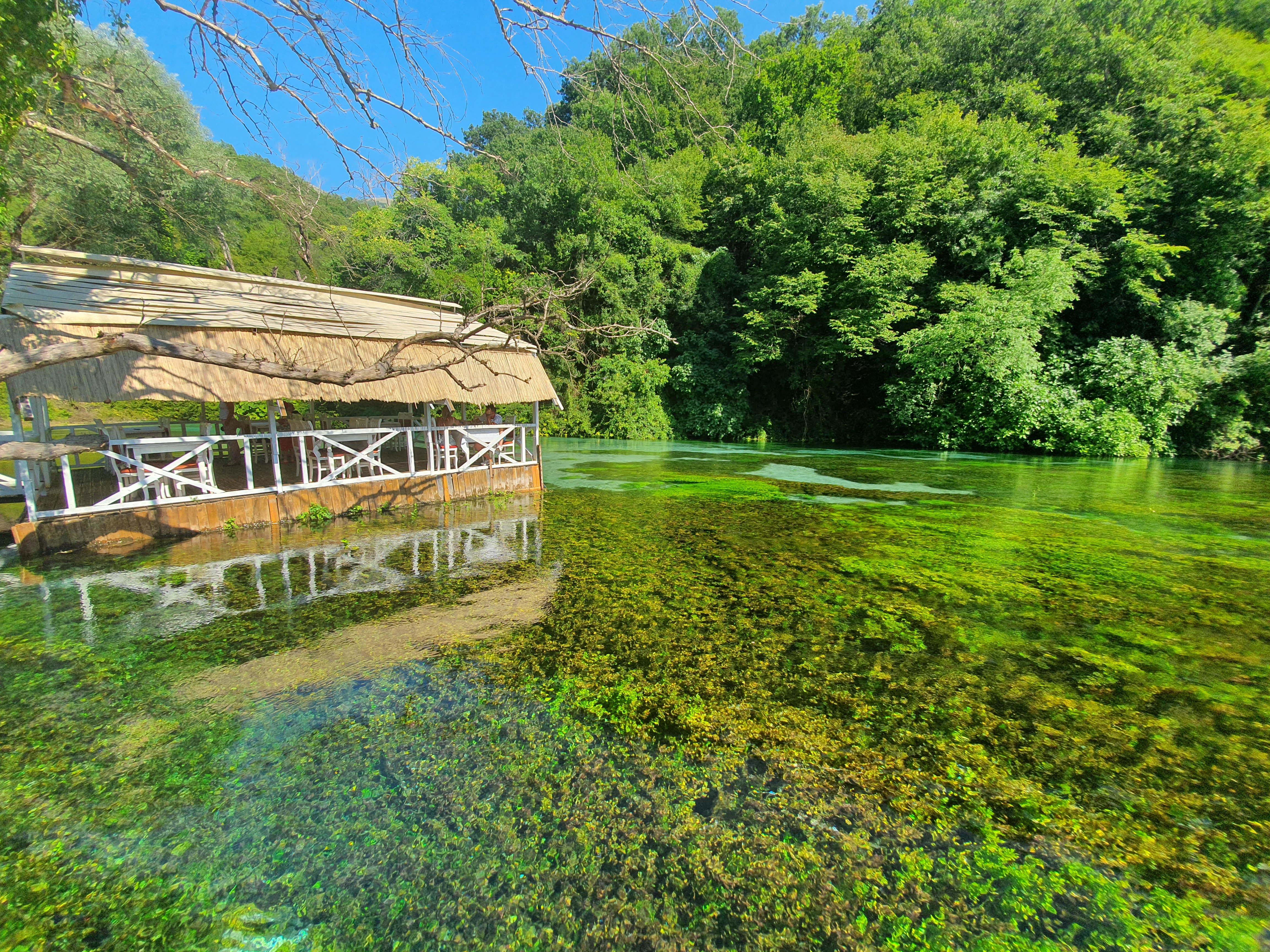
Crystal clear water
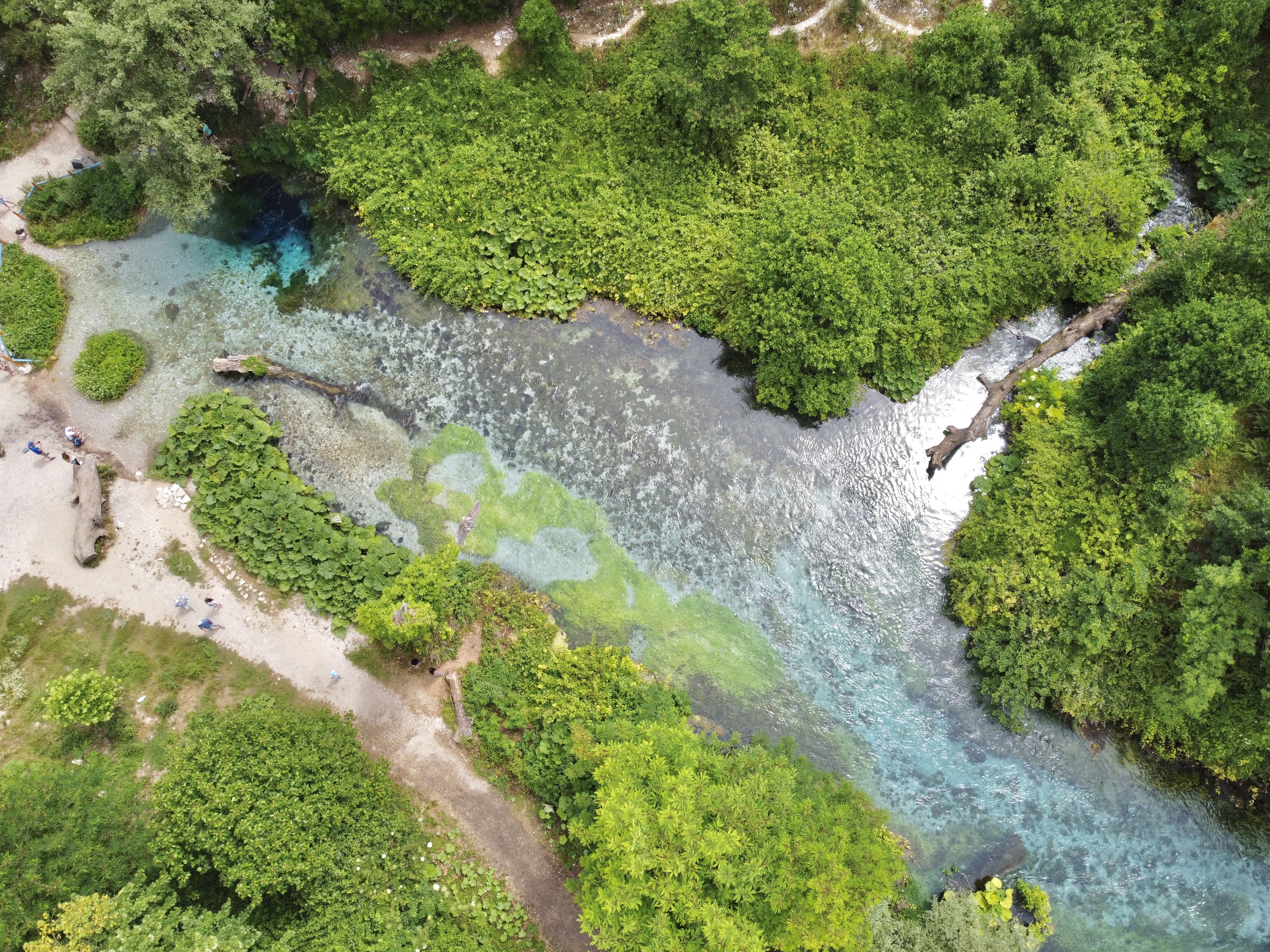
Lush forest
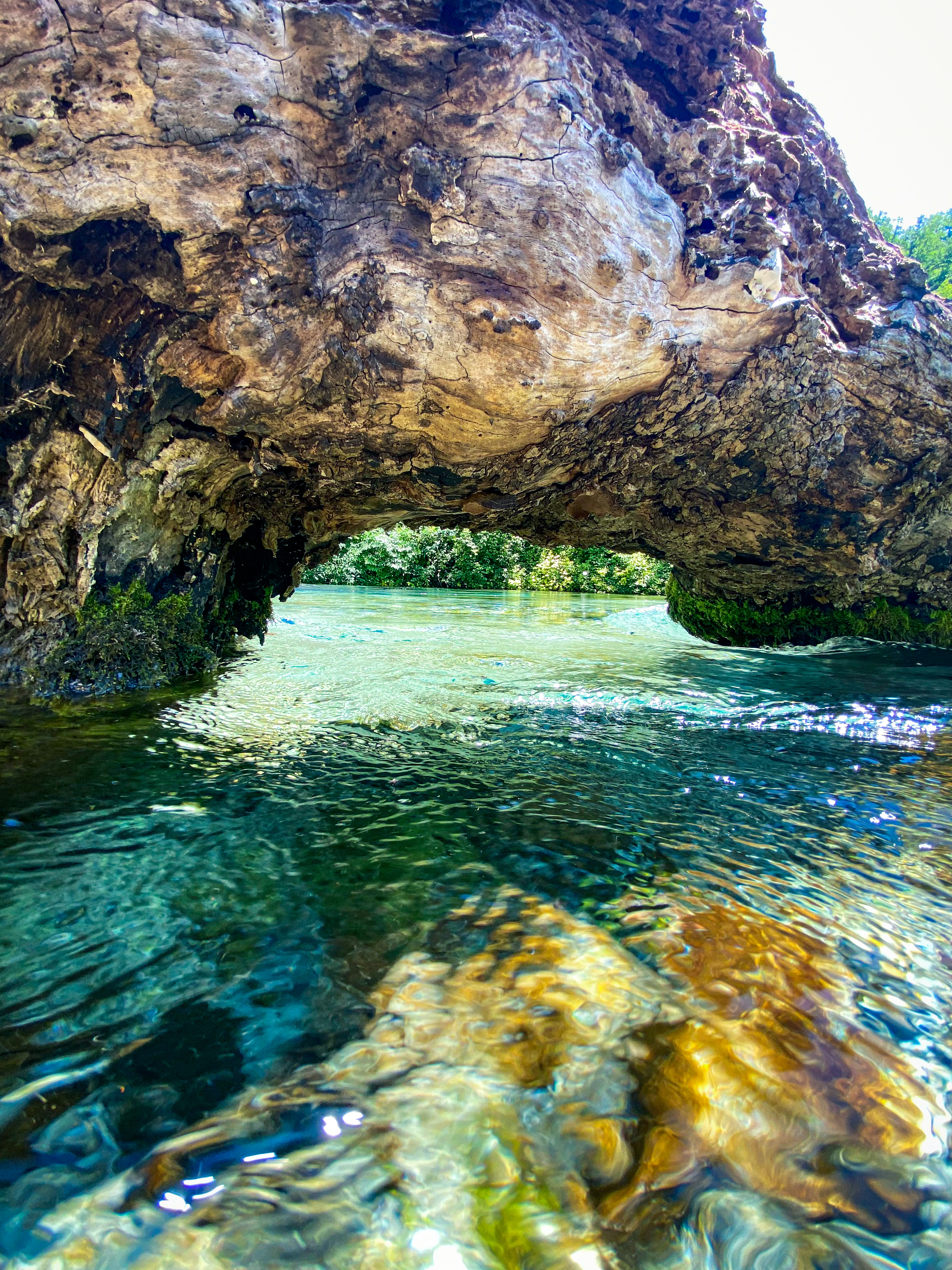
Nature reserve
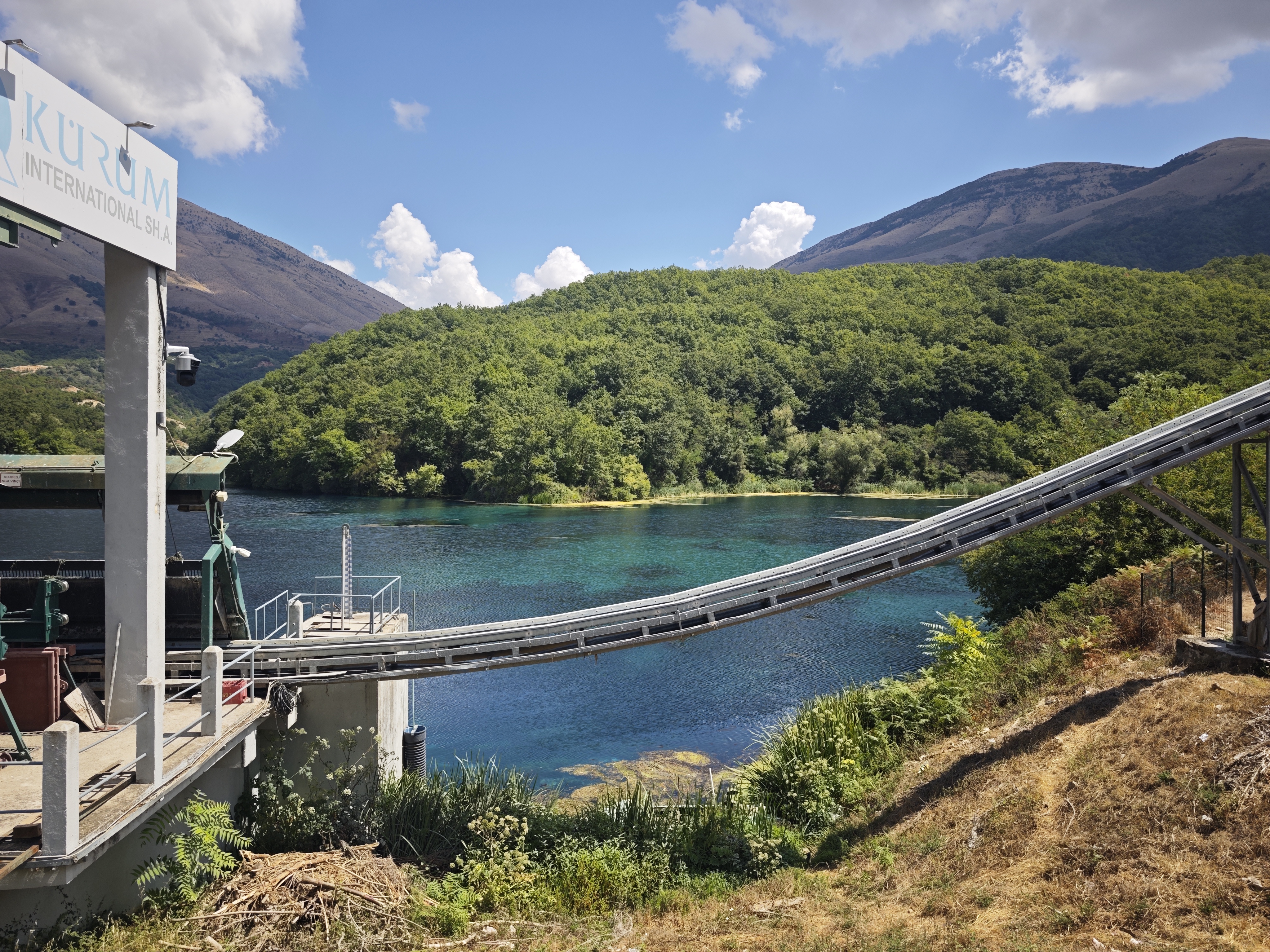
Spring details
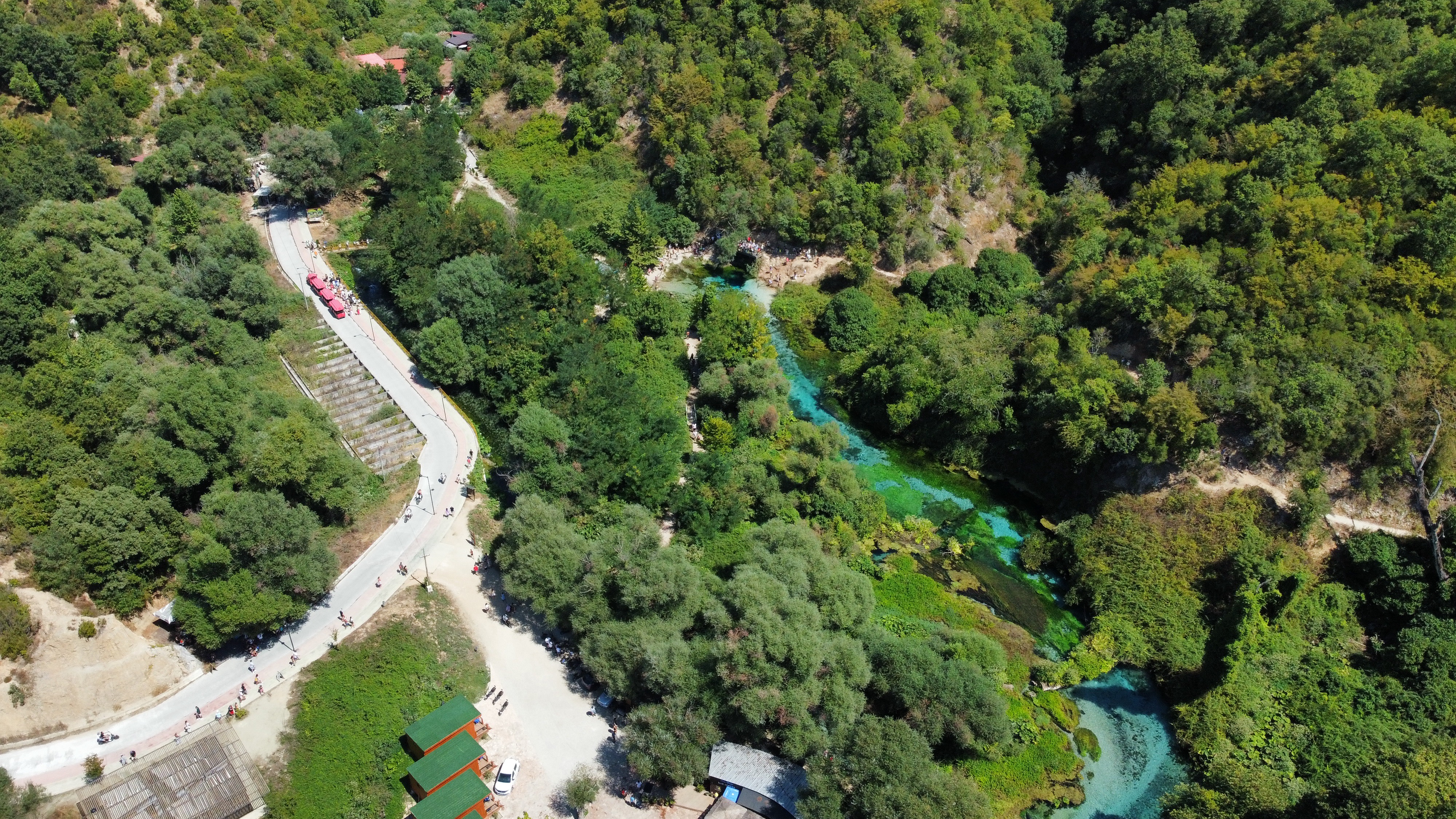
Surrounding nature
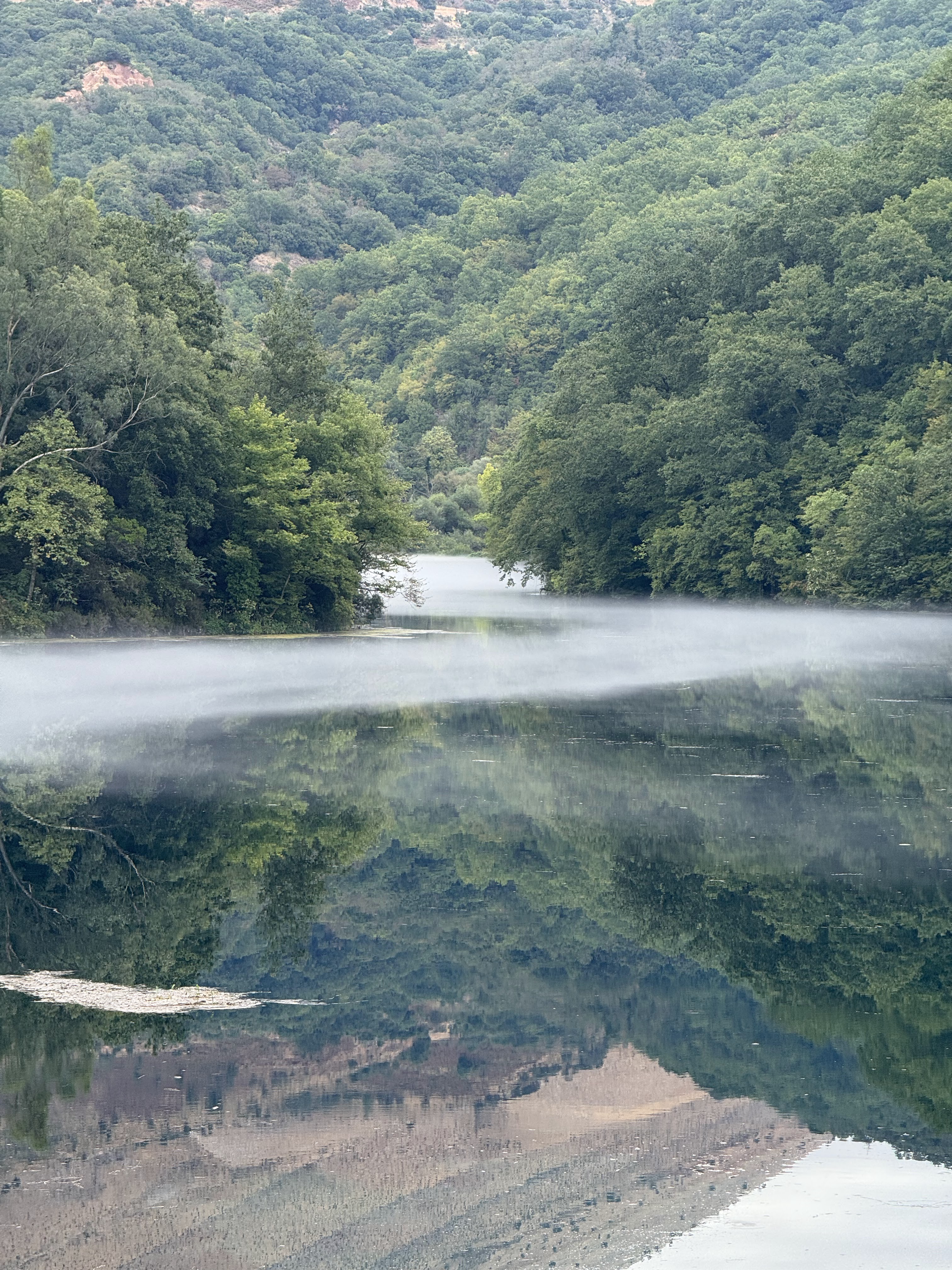
River Bistricë
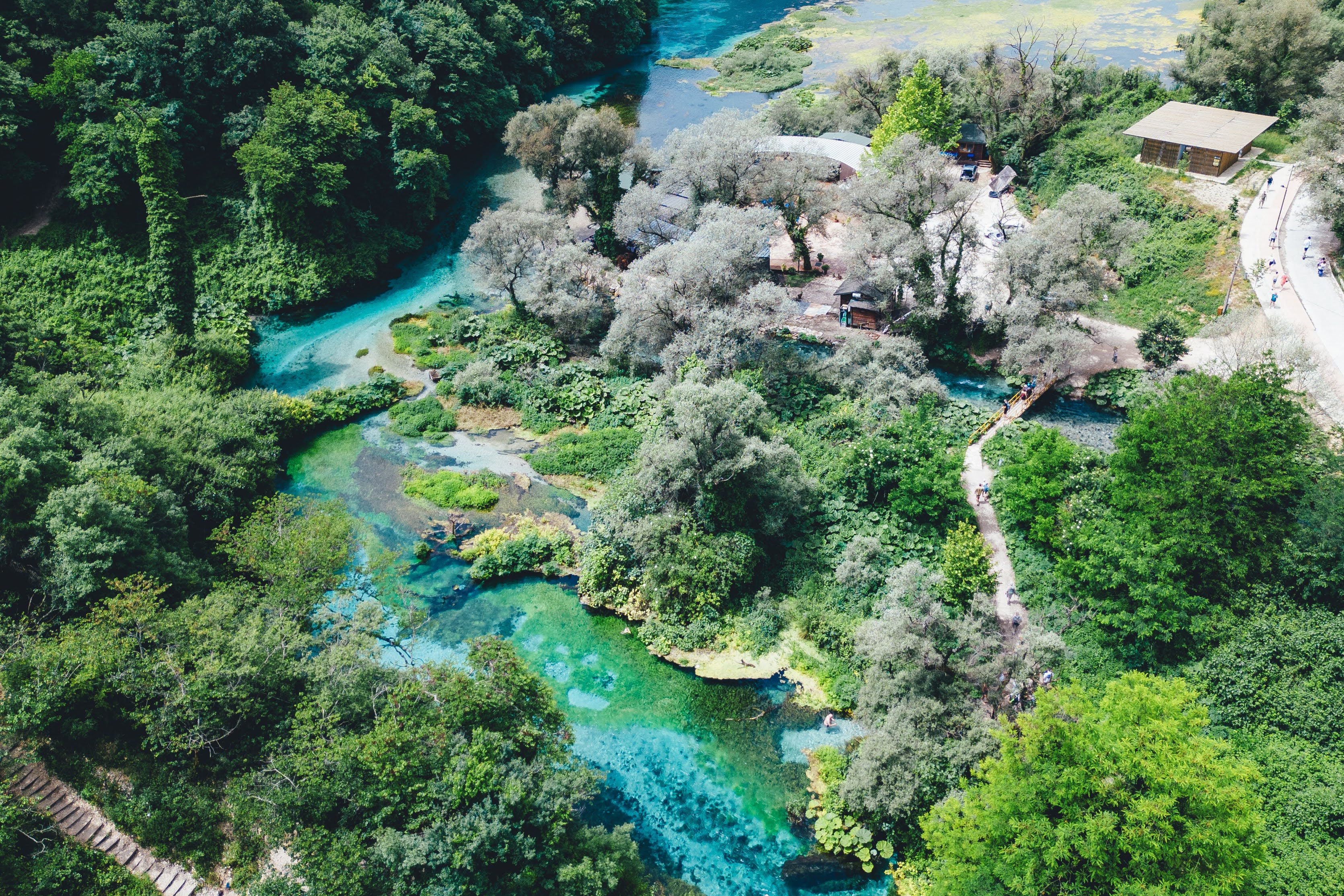
Viewing platform
Visitor Reviews
Reviews can be viewed via Google Maps.
Absolutely stunning natural beauty. The colors of the water are unbelievable!
Very beautiful, but gets quite crowded in the afternoon. Come early!
A magical place. The cold water is refreshing, and the surrounding forest is peaceful.
Great spot for photography. The walk from the parking lot is very pleasant.
The Blue Eye was stunning. Definitely go to see it if you have the chance.
Incredible experience!! The place is amazing 😍. 100% recommended.
Beautiful monument!! This is a must see!!
The location is stunning! Surrounded by nature and the river fed by the crystal-clear waters of the Blue Eye spring.
Frequently Asked Questions
Can you swim in The Blue Eye?
Swimming in the central 'eye' spring is officially prohibited to preserve the natural ecosystem, and there are signs warning against it. Despite this, some visitors still jump in. The water is extremely cold (around 10°C / 50°F year-round) and the underwater currents can be deceptively strong.
Is there an entrance fee?
Yes. There is a small entrance fee to access the nature reserve (approximately 50 lek per person) and a separate parking fee if you arrive by vehicle (approximately 200 lek). Payment is cash only, so bring Albanian lek in small notes.
How long does it take to visit?
Most visitors spend 1 to 2 hours at the site. It takes about 20-30 minutes to walk from the parking area to the spring, plus time for taking photos, enjoying the view, and perhaps relaxing at a nearby café.
How deep is The Blue Eye?
The exact depth is still unknown. Divers have descended to 50 meters (164 feet), but the strong upward pressure of the water makes it difficult to explore further. The deep karst hole gives the spring its dark blue 'pupil' appearance.
Are there places to eat nearby?
Yes, there are a few simple restaurants and cafes near the spring where you can get drinks, snacks, and traditional Albanian dishes, often featuring local trout raised in the cold spring water.
Is the path accessible for wheelchairs or strollers?
The path from the parking area is mostly paved but involves a walk of about 1.5 to 2 kilometers. While it is relatively flat, there are some uneven sections and steps near the viewing platform, making it only partially accessible for wheelchairs.
How far is The Blue Eye from Saranda?
The Blue Eye is about 25 km (15 miles) from Saranda. The drive takes roughly 30–40 minutes inland along the road towards Gjirokastër, or about 45 minutes by the public bus that runs between the two towns.
Are there toilets at the Blue Eye?
Yes. Public toilets are located near the entrance and at some of the food stops along the approach path. They are basic, may charge a small fee and queue heavily around midday in summer. Dedicated baby-changing facilities are uncommon, so plan around that before leaving Sarandë.
Is there parking, and how early should I arrive?
A paid car park serves the reserve entrance, with separate bays for coaches. Spaces are limited and usually full between 10:00 and 16:00 in July and August, so arriving before 10:00 or after 16:00 makes the visit noticeably calmer.
Can I charge an electric car near the Blue Eye?
Not at the spring. Public charging in southern Albania is still sparse and not always operational, so charge in Sarandë or a larger city before heading inland and treat the Blue Eye as a destination without charging facilities.
Where is the best place to stay for a visit?
There is no accommodation inside the protected area. Most visitors stay in Sarandë or Ksamil on the coast, or in Gjirokastër and Delvinë inland, with a few village guesthouses in the countryside between them. Wild camping is not appropriate within the monument.
Can I drink the spring water?
We do not advise it. However clear it looks, the water comes from a karst aquifer shared with the wider catchment and is not treated or monitored as drinking water. Bring your own supply and carry out any packaging.
Are drones and tripods allowed?
Recreational drone flights over Albanian protected areas are restricted and normally require authorisation, so assume you cannot fly without checking with the responsible authority first. Handheld and tripod photography is fine on the viewing platforms — just keep the narrow walkways clear.
What other names is the Blue Eye known by?
The same spring appears as Syri i Kaltër in Albanian, The Blue Eye, Blue Eye Albania or Blue Eye Saranda in English, Blue Eye Albanien in German travel guides, Œil Bleu / Blue Eye Albanie in French, and 蓝眼泉 (Lán Yǎn Quán) in Chinese. They all refer to the karst spring near Muzinë, about 25 km from Sarandë.
Official Sources
Links to official Albanian government institutions for verification and further reading.
- National Agency of Protected Areas (AKZM)
- Albanian National Tourism Agency
- Ministry of Tourism, Culture and Sport
- National Institute of Cultural Heritage (IKTK)
- State Authority for Geospatial Information (ASIG)
- AKZM — Protected area passport: Blue Eye Nature Monument (PDF)
- Protected Planet — Syri i Kaltër Nature Monument (IUCN category III)
- UNESCO World Heritage Centre — Butrint
- Invest in Albania — Albanian legend: how the Blue Eye was created
- Open-Meteo — open weather API (ECMWF / DWD models)